
What an Alameda Resident Lookup Can Confirm
An Alameda resident lookup is a chain of records with different custodians. The Assessor can connect an address to a parcel and an ownership interest. The recorder can show a party’s role in an instrument. The court can show a public case connection. Vital and probate records answer event or estate questions. Business and license records add a public role or regulated status. None of these sources, alone, proves that a person currently lives at a particular place.
| Record | What It Confirms | Where | Access |
|---|---|---|---|
| Assessor parcel | Ownership interest, situs, tax mailing, APN, assessed facts | Alameda County Assessor | Address or APN route |
| Recorder index | Grantor, grantee, trustor, beneficiary, type, date, chronology | Clerk-Recorder | Online index; image by office or order |
| Court case | Party name, case number, filings, hearings, permitted documents | Alameda Superior Court | eCourt, Odyssey, terminal, or request |
| Vital record | Birth, death, or marriage event and identity facts | County Clerk-Recorder or CDPH | Authorized or informational copy rules |
| Business or license | Entity, agent, regulated name, status, discipline, public address | SOS, county FBN, DCA boards | Public search varies by register |
| Probate | Decedent, petitioner, personal representative, heirs when publicly filed | Alameda Superior Court | Portal or file with confidentiality limits |
Use the table as a selection tool. A person clue with no date needs an identity anchor. An estate clue should begin in probate. A business clue belongs in filings and licenses. An address clue should begin with the parcel, because the recorder has no address or APN search field.
Two Alameda Resident Anchors
Begin with two independent facts: full name plus Alameda address, APN, middle initial, approximate event date, spouse, entity, or license number. Preserve spelling exactly as an index displays it. Then try former names, initials, compound surnames, reversed name order, and trust or entity versions. Recorder indexing follows the recorded document, so a trust may replace the individual’s familiar name.
Time is the second filter. Ask whether the deed date fits the parcel, whether a business statement uses the same period, whether a court filing falls in the relevant years, and whether a directory entry uses the same spouse or street. Treat a situs address, mailing address, agent address, business address, and residence clue as separate facts.
- Write the starting clue and the date or era it belongs to.
- Find one official result without treating a name match as final.
- Find an independent record with a matching place, date, spouse, entity, or document number.
- Mark conflicts instead of smoothing different people into one profile.
A search engine cannot correct an Alameda assessor roll, voter status, court docket, certificate, or recorded instrument. Corrections belong with the custodian that created the record.
Property and Tax Clues for Alameda
The Alameda County property-tax search covers secured, supplemental, and delinquent account information. The Assessor Parcel Viewer is the practical address and APN route. A result may supply the parcel, situs, owner interest, tax mailing address, assessed value, and property characteristics. Ownership is a useful identity anchor, not proof of occupancy.
Keep the tax account separate from title. The recorder’s index follows parties and instruments. The tax search follows an account. A mailing address can suggest another place to search, but it may belong to a trustee, business, or correspondence destination. For one person, pair the property clue with a deed, court, business, license, or historical record.
The Alameda County property-tax search provides a parcel and account clue for a resident lookup.
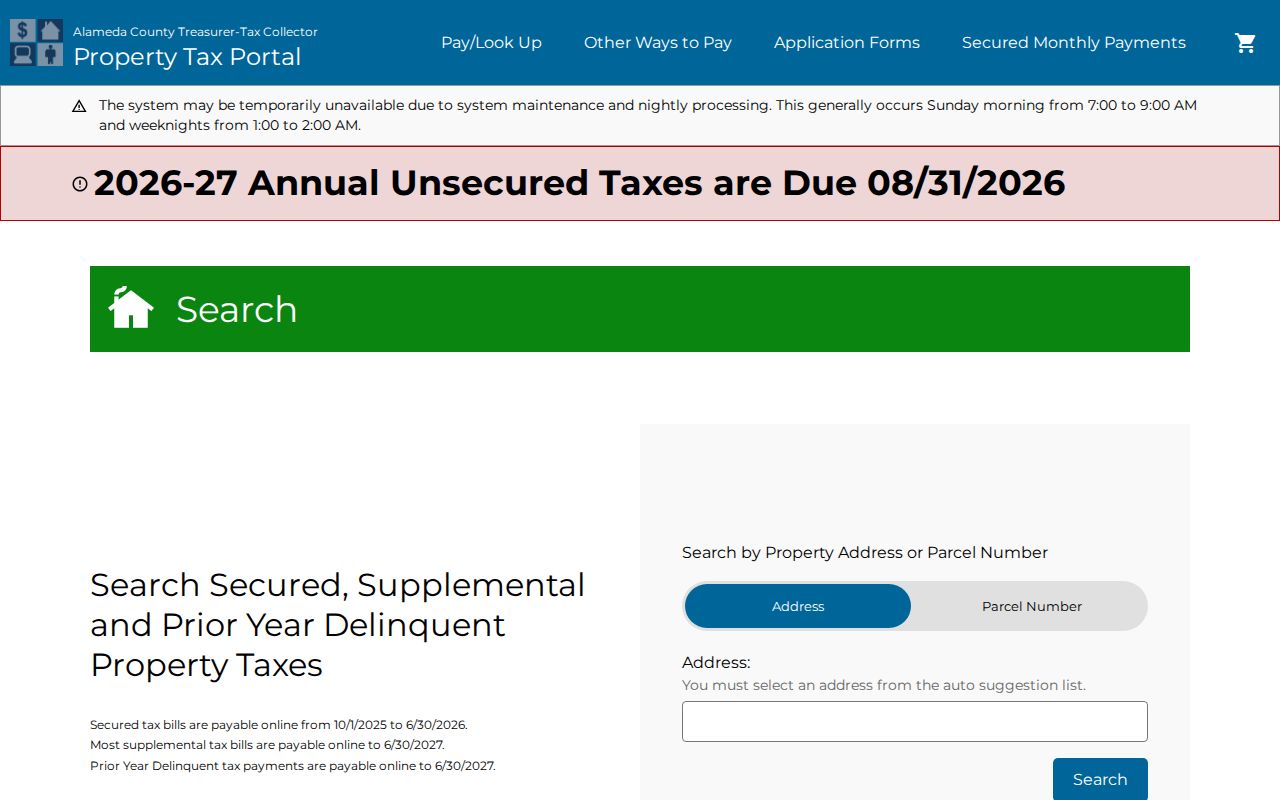
The tax-search capture shows a location clue that needs interpretation. Use the parcel and account to stabilize the name, then verify with a separate custodian.
Note: A tax mailing address is not a public statement that the owner occupies the parcel.
Alameda Court Party Search
The Alameda Superior Court separates civil, probate, family, mental-health, and related work in eCourt from criminal information in Odyssey. eCourt uses account-based functions for name and case-number searches. Odyssey supplies free criminal information for cases with activity since 2005. A courthouse terminal can show public documents that the remote view does not provide.
| Portal Mode | Fields or Action | Result |
|---|---|---|
| Name Search | Account login; gated name fields not captured | Party and case matches |
| Case Number Search | Known case identifier | Case record and permitted documents |
| Direct Calendaring | Department and calendar type | Calendar information |
| Public Reports | Filing date, location, case type | Filing reports; first complaint or petition may be temporarily free |
Documents and archived files vary by division. Sealed, juvenile, adoption, guardianship, conservatorship, and confidential matters remain restricted. The court does not conduct research by phone or email, but staff can direct a requester to the correct unit, terminal, mail search, or form.
Read an Alameda Court Result Correctly
A case result can show a case number and title, party names, Register of Actions, minutes, future hearing dates, image links or previews where allowed, and purchase or download controls. A docket is the chronological record of filings and court events. It does not mean every document is open or that every named party lives in Alameda.
- Docket
- The court’s dated case history, including filings, hearings, and actions.
- Index versus image
- An index identifies a case or document; an image is the underlying file when access is allowed.
- Certified copy
- A custodian-attested copy used when an official recipient requires certification.
- Register of Actions
- The court’s event list for a case, distinct from every filed document.
Reported court charges include $0.50 per page, $25 for certification, $15 for a search over ten minutes, $10 for off-site retrieval, and additional charges for authentication or exemplification. The civil-record request form lists a mail and copy route. Check the current court page before ordering. The lookup goal should determine whether an index view, a terminal visit, a copy, or a certified record is necessary.
The Alameda Superior Court probate page supplies the specialized estate-record route.
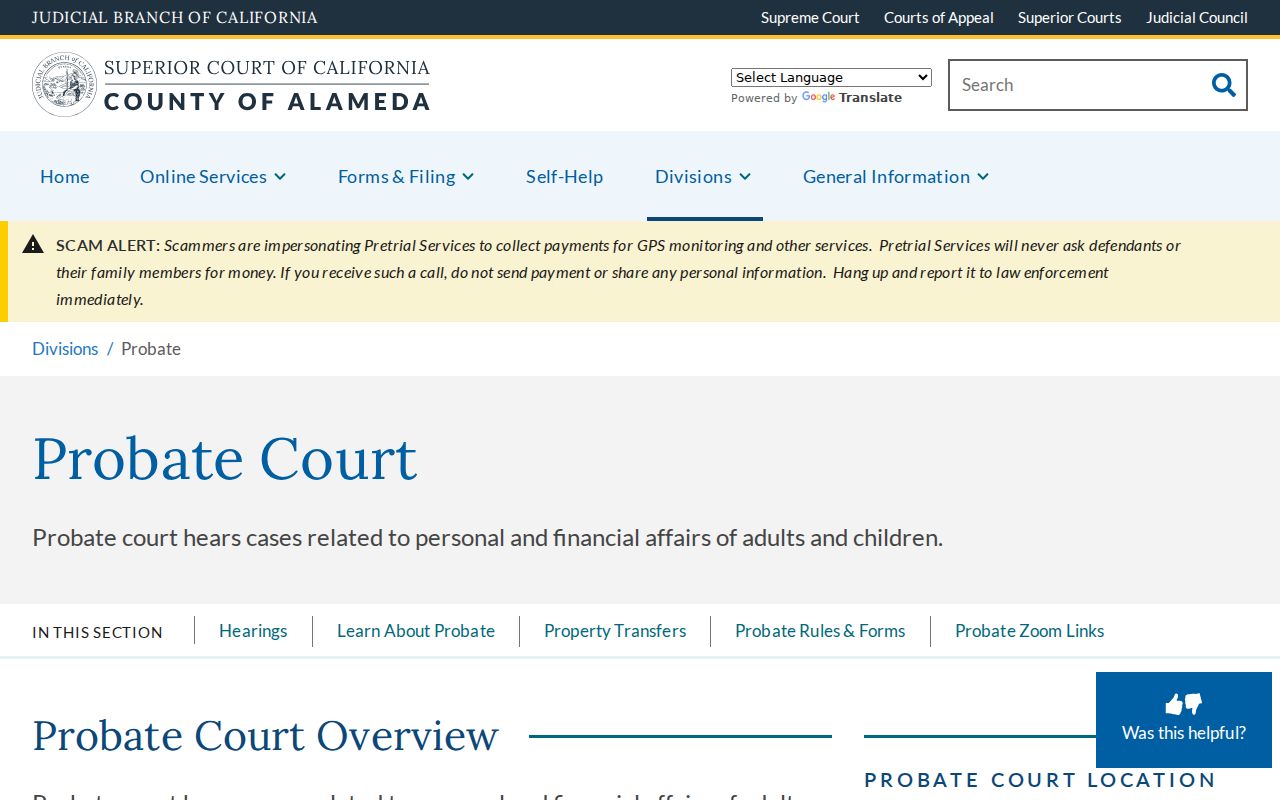
The probate page shows the specialized court path. Use the case number and filing role to separate an heir, petitioner, fiduciary, and decedent from a same-name person.
Alameda Vital Lookup Copies
California uses authorized and informational copies rather than a simple age-based public opening rule. Health and Safety Code sections 103525-103526 govern the distinction. Informational birth, death, and public-marriage copies are broadly available, but they are marked not valid to establish identity. Authorized copies require a qualifying relationship or authority and a sworn statement.
Alameda County issues county birth, death, and public marriage certificates. CDPH supplies statewide certificates and maintains state records. Confidential marriage certificates are narrower and generally limited to the parties or a court-authorized requester. Adoption records are court-confidential. A certificate request can confirm an event, but it is not an open personal-name index.
| County birth | Reported current fee $36; authorized or informational routes. |
|---|---|
| County death | Reported current fee $28; access depends on copy type. |
| Statewide CDPH birth | Reported 2026 fee $31 and average processing of four to six weeks. |
| Public marriage | County and CDPH coverage varies by year; confirm the issuing county. |
Use the California Vital Records page for current forms and the county Clerk-Recorder for local service. A birth certificate request does not unlock an adoption file.
Alameda Voter Lookup Limits
My Voter Status and Alameda My Voter Profile are self-service tools. They authenticate a voter with first name, last name, date of birth, a driver license or state ID choice, and the last four Social Security number digits or a no-number choice. The returned information can include status, polling place, ballot or sample-ballot information, language, districts, party preference, and ballot status.
This is not an open resident lookup. California voter files are restricted to approved election, scholarly, journalistic, political, or governmental purposes under Elections Code sections 2187, 2188, 2194, and related regulations. The Secretary of State’s voter-file request page explains eligibility, fees, scope, and use limits. Commercial use, unapproved solicitation, harassment, and transmission abroad are prohibited. Confidential and Safe at Home voters have added protections.
When the question is your own registration, use the official California status tool. When the question is an approved voter-file request, use the Secretary of State’s eligibility process or the Alameda Registrar of Voters request route. A specific-voter request does not mean everyone on a street.
Find an Alameda Heir Through Probate
An heir or estate question has its own one-person path. Search the decedent in the probate portal, record the case number and petition date, and identify the petitioner and personal representative. Public petitions and notices may identify heirs, addresses, counsel, and estate steps. Pair the file with a death record or obituary, then check for a later deed by the estate or successor trustee.
- Start with the decedent’s full name and a likely Alameda period.
- Save the case number, filing role, petition date, and public document titles.
- Compare the names with the death index, obituary, deed party, and known parcel.
- Stop at guardianship, conservatorship, sealed, or confidential documents unless an authorized route applies.
Probate images after January 31, 2006 are generally online except for protected categories. A public heir reference is still an estate record, not proof of a present residence. Keep the estate connection and the address connection in separate notes.
Alameda Adoption Lookup Route
Alameda adoption court files are confidential and available only by court order. The court gives 510-891-6003 for information about the proper process. A birth certificate request does not open an adoption file. California’s official adoption-information and consent procedures through CDSS and the Judicial Council are the lawful route for a birth-parent connection.
The resident lookup should respect the distinction between an event certificate, an adoption file, and a voluntary consent or information process. A public name match cannot defeat a sealed file. The goal is a permitted connection supported by the correct agency, not a workaround built from unrelated addresses.
Use the right channel. Confidential adoption and protected-address rules are stopping points. Do not combine public records to defeat a court order or safety program.
Alameda License Lookup Anchors
A public business or professional role can supply a strong second anchor. Alameda County fictitious business name records connect a local trade name to a registrant. California Secretary of State bizfile records connect an entity to filings, agents, officers, managers, and addresses. DCA, the State Bar, and the Department of Real Estate add regulated names, license numbers, status, admission or issue dates, and public discipline where published.
Use the record that matches the clue. The FBN search is different from an SOS entity search. A registered agent is a legal service contact, not necessarily an owner or resident. A license address may be a business or mailing address. Check entity date, county, name spelling, and address type before tying the result to an Alameda person.
The Alameda County fictitious business name search shows the local trade-name layer.
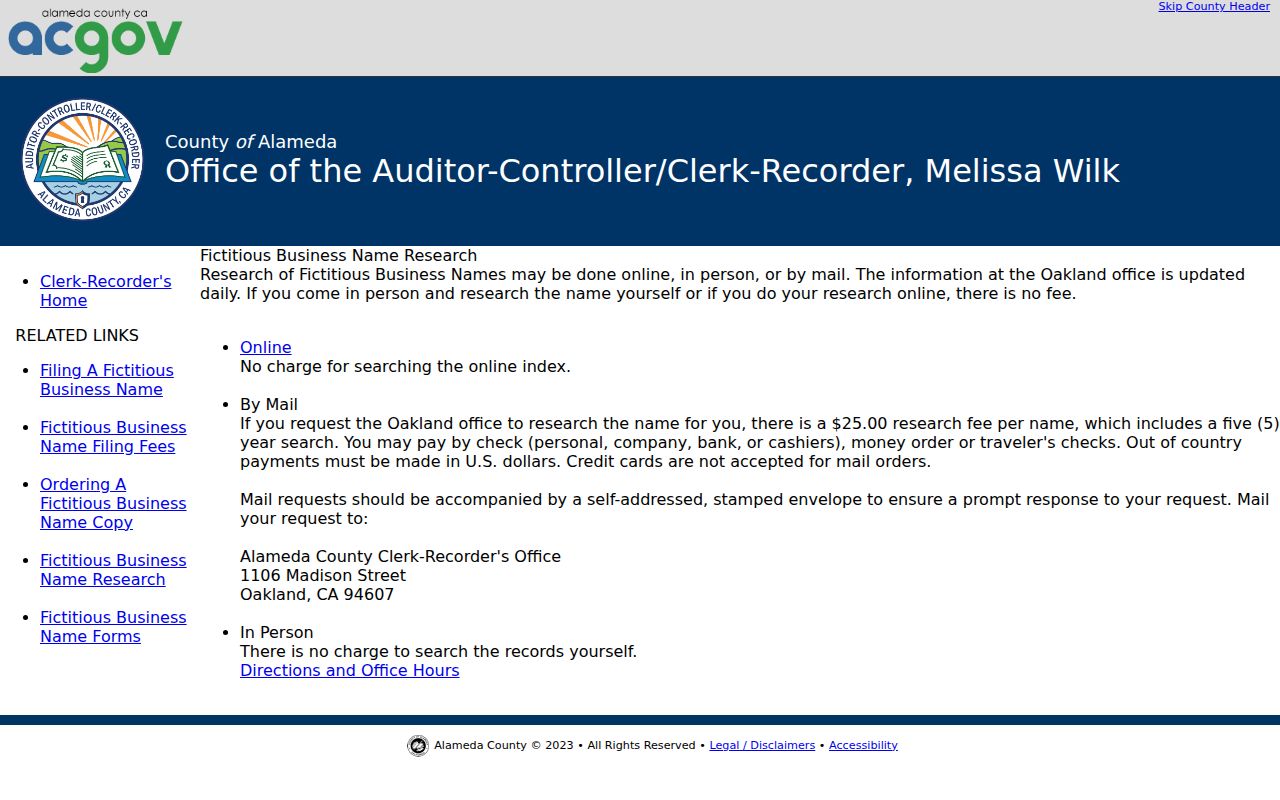
The county FBN screen represents a local trade-name layer. The self-search is free, while clerk mail research is reported at $25 per name for five years.
The California State Bar license search adds a regulated-name comparison point.
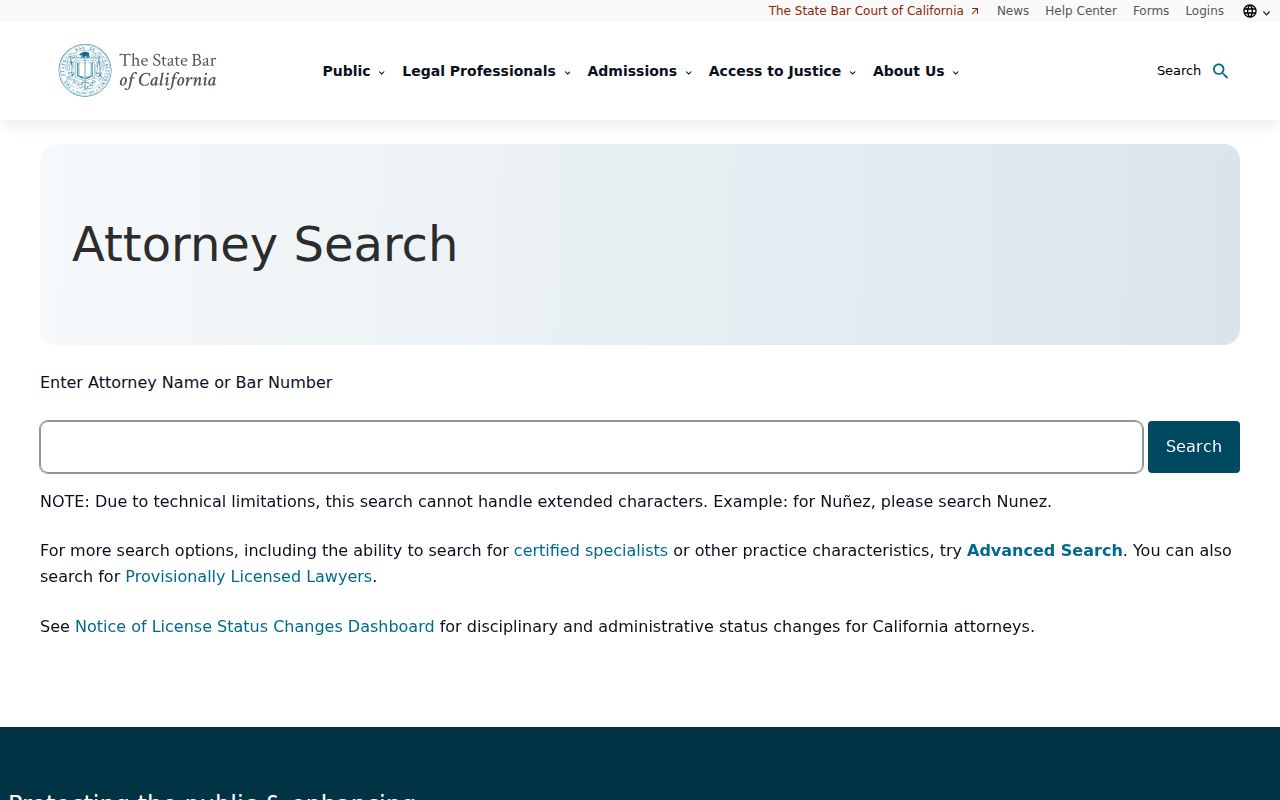
A board result can help distinguish people with the same name, but it remains a professional record rather than a residence record.
The California Department of Real Estate license lookup adds a name, company, license, or mailing-city comparison point.
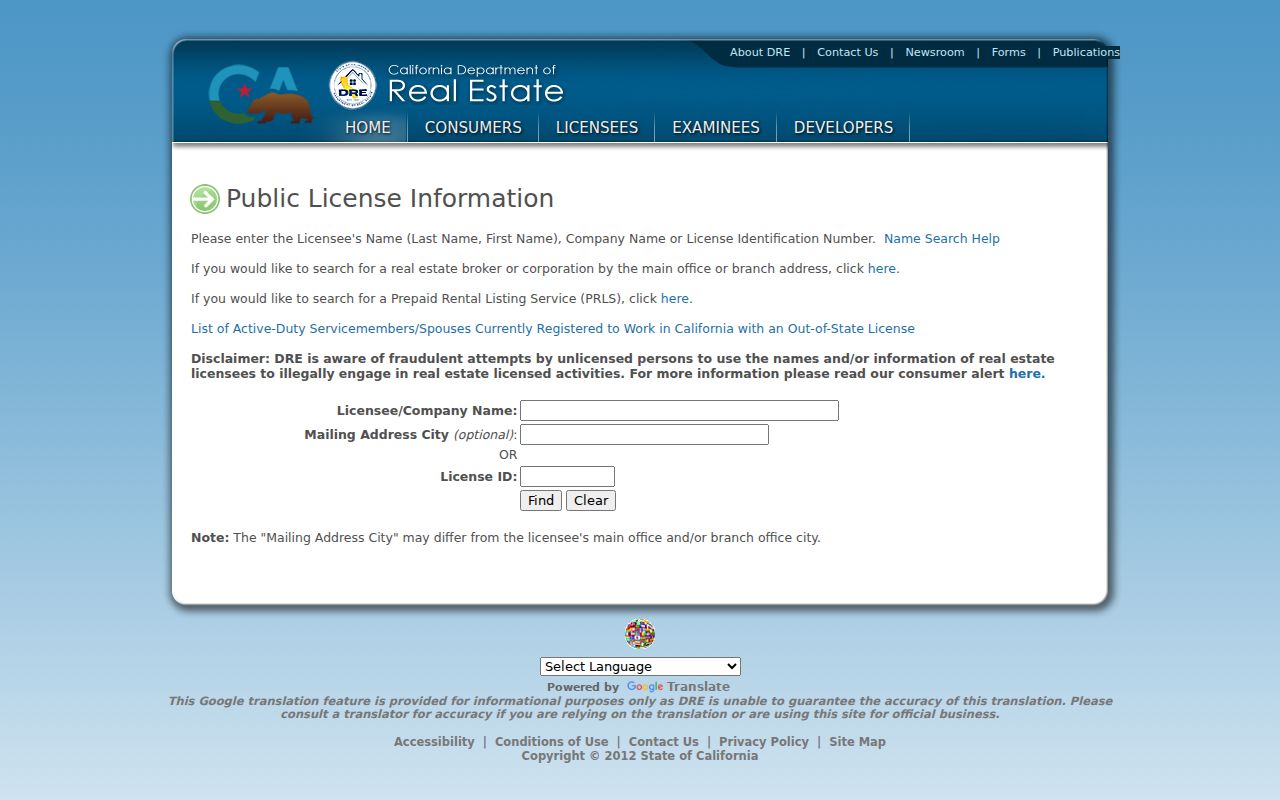
The DRE search adds a name, company, license, or mailing-city comparison point. Match it to the same time period before accepting the identity.
Correct an Alameda Record at Its Source
When a resident lookup produces a wrong name, address, or status, contact the custodian that created the record. The Assessor controls parcel facts. The Clerk-Recorder controls recorded instruments and certificates. The court controls dockets and copies. The Registrar of Voters controls registration data. A business or license agency controls its own filing.
Keep the document number, case number, APN, application, or license number with the correction request. Describe the exact field and attach only the proof the agency asks for. Do not expect an external directory or search engine to amend the official source.
Lawful personal use. An Alameda resident lookup is for lawful personal research, family history, estate work, and legitimate civic questions. Do not use records to stalk, harass, intimidate, or harm anyone.
That final check is what turns a name hit into a responsible record trail. If the custodian cannot disclose a protected item, treat the limit as part of the answer.