
Sources for Alameda Previous Residents
The strongest backward address trail pairs ownership sources with household sources. The recorder follows named parties. Directories and telephone books follow listed adults or subscribers. Census schedules show decennial households. Permits date physical work. Sanborn maps show the structure. Obituaries and probate can explain why a name disappears or why an estate later transfers the parcel.
| Source | Years It Covers | Where Held | What It Shows |
|---|---|---|---|
| Recorder | 1853-present; online index 1969-present | Clerk-Recorder and older microfilm | Owners, parties, instruments, title chronology |
| City directories | 1869-1877 microfilm; 1877-1943 hardcopy | Alameda Free Library | Listed adult, spouse, occupation, address by edition |
| Telephone books | Most 1935-2013 | Alameda Free Library | Subscriber and address continuity, with gaps |
| Federal census | 1870-1950 released schedules | NARA and genealogy databases | Household relationships and characteristics |
| Permits | Post-1995 ACA; earlier digitized microfiche | City Permit Center | Work, parties, dates, inspections |
| Sanborn maps | 1897-October 1950 | Library of Congress | Building footprint, material, numbering |
No single source runs without gaps. The handoff points are part of the method: the recorder changes from online index to microfilm in 1969, ACA divides modern from pre-1995 permits, the directory shelf ends its main run in 1943, and telephone books carry a later but incomplete address trail.
Start With an Alameda Address
Begin at the Alameda County Assessor Parcel Viewer with the current situs address or APN. Save the APN, map shape, legal or parcel clues, and current ownership information shown by the custodian. Keep the tax mailing address apart from the physical location. The assessor can identify an ownership interest, but it does not enumerate every person who used the address.
- Resolve the address to an APN and record the exact situs spelling.
- Note the current owner and latest deed instrument number when available.
- Compare the parcel with the City GIS and permit address before searching backward.
- Save the date of the parcel check because public rolls can change.
The latest deed instrument number is the bridge to a name-keyed recorder search. If it is not visible, the Assessor customer-service route can help with a known address or APN. A current parcel is the starting point, not the first previous resident.
Search the Alameda Deed Chain
The Alameda recorder has no street or APN index. Use the current owner’s name in the Official Public Records Index, identify the acquisition instrument, and read the seller as the earlier party. Then search that seller as a grantee in an older transfer, confirming the legal description each time.
Record grantor, grantee, instrument number, recording date, document type, APN or legal description, and any trust or entity wording. One party may own several parcels. A name match without the land description can send the backward trail to the wrong street.
The Alameda official public-records history page establishes the long coverage of the land record.
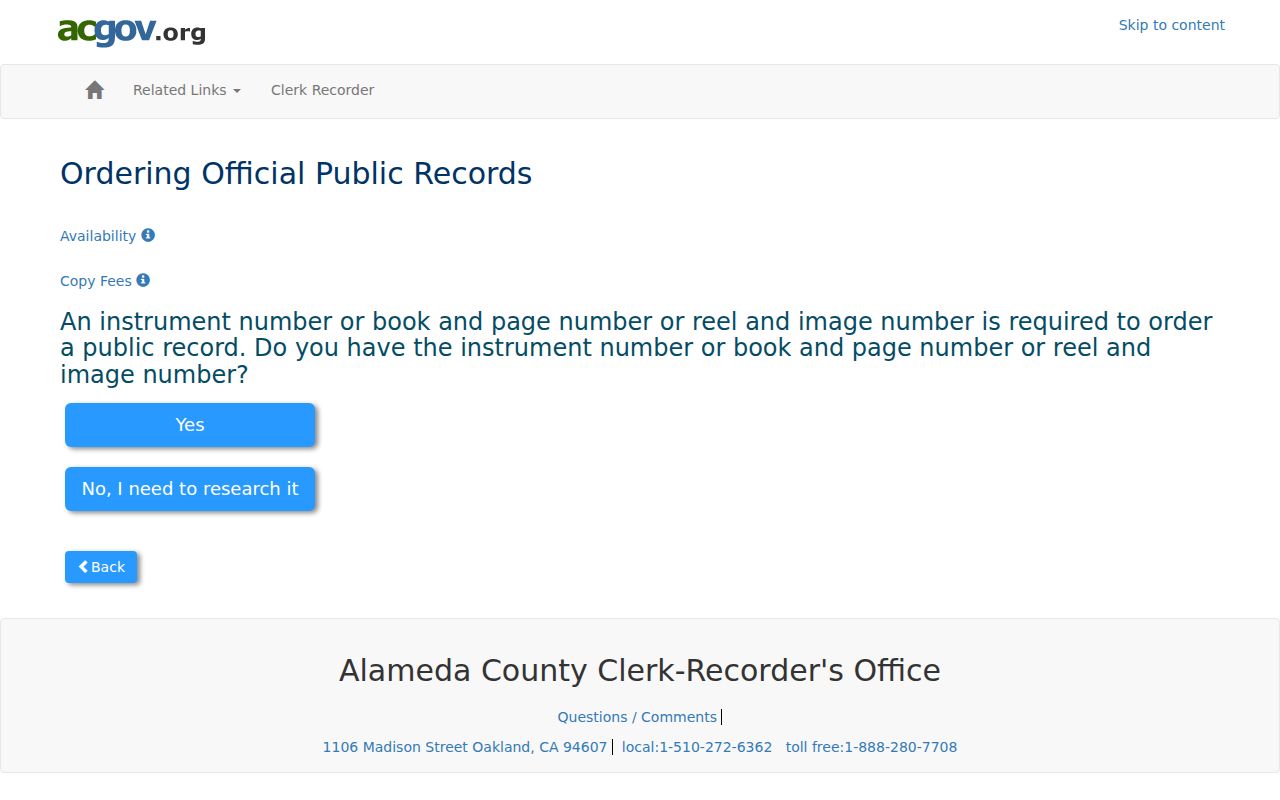
The official public-records history view establishes the long coverage of the land record and the need to bridge from a modern party search to earlier indexes.
Note: The chain of title follows recorded interests, while the past-household trail needs a separate occupant or household source.
The 1969 Alameda Deed Handoff
The online recorded-document index reaches 1969 to the present. At 1969, the research route changes to alphabetical grantor and grantee microfilm at the Clerk-Recorder’s Oakland office at 1106 Madison Street. County records reach back to 1853. This is not a duplicate of the web search. It is the earlier index route needed for older households whose deed trail predates the online period.
The Clerk-Recorder lists Oakland and Dublin public-record service. Dublin performs public-record searches and recording but does not accept mail. Mailed transactions go to Oakland. Counter searches and recording cutoffs occur before closing, so confirm the current hours and process before traveling.
The Clerk-Recorder search guidance captures the practical transition between remote index, counter research, mail ordering, and earlier microfilm.
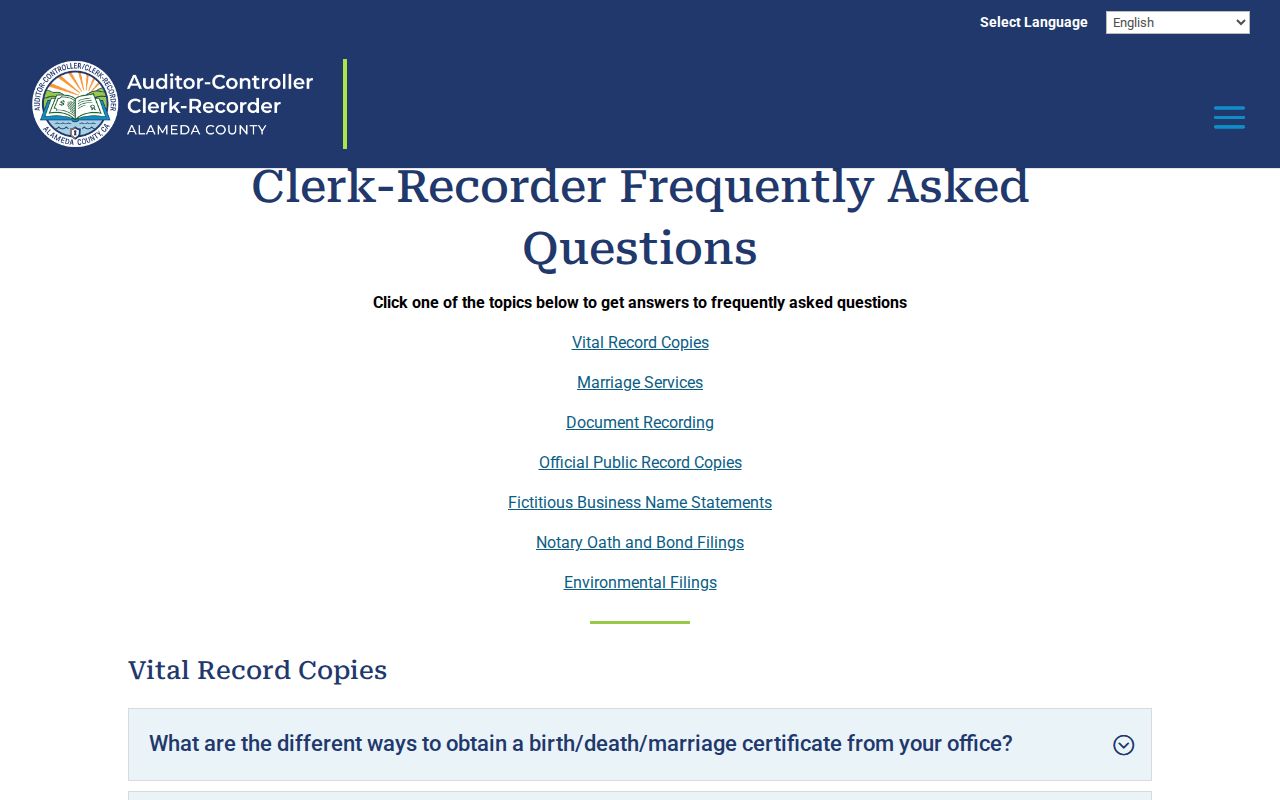
The Clerk-Recorder guidance captures the practical transition between remote index, counter research, mail ordering, and earlier microfilm.
Order an Alameda Deed Image
An index hit identifies a record. It is not the record image. The Clerk-Recorder’s recorded-document service can supply a plain or certified copy using the instrument number. The research reports plain copies at $3.50 per page, certified copies at $4.50 for the first page plus $3.50 for each additional page, a $2 online convenience fee, and mail delivery in five to ten business days.
Use the recorded-document copy route after confirming the party, date, type, and land description. The image may show the grantor, grantee, legal description, APN, transfer language, and signatures. A later deed can expose the next former owner, but it does not name every person who used the property.
The Alameda recorded-document copy service shows the order route after an index hit.
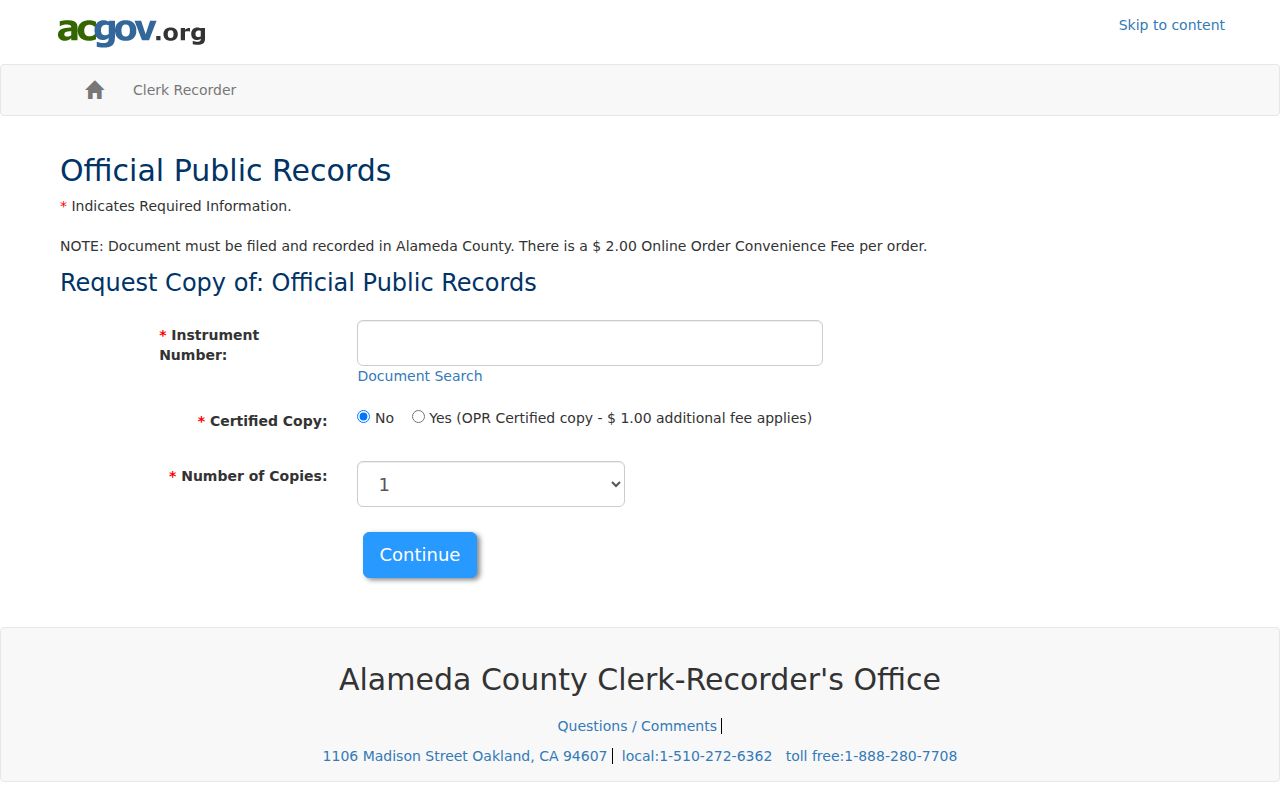
The copy-order screen shows why a previous residents search should preserve the instrument number before leaving the index.
Alameda Directories Bridge Past Residents
The Alameda Free Library holds early directory microfilm from 1869-1877, hardcopy city directories from 1877-1943, and most local telephone books from 1935-2013. These sources can connect a name to an address in a given year. They do not establish title. A directory entry may list a spouse, occupation, householder, or subscriber, while a deed names a recorded party.
For previous residents, begin with the year closest to the deed transfer. Copy the full entry and locality suffix. Move one edition at a time. If a name disappears, check the next telephone book, newspaper, obituary, deed index, and probate. The library’s combined East Bay volumes require care because an Oakland or Berkeley entry can resemble an Alameda result.
The historical collections themselves are described on the Alameda city directory page. Here, the city directory is one occupancy clue in a longer address timeline.
Alameda Telephone Books and Census
Telephone books carry listed names beyond the main city directory run, but the absence of a subscriber proves little. A person may have been unlisted, used another name, moved between issues, or fallen into a missing volume. Use the directory address, spouse, and occupation as continuity anchors rather than treating each entry as a full household.
Federal census schedules released through 1950 add ages, relationships, birthplace, and household composition at decennial points. Pair the nearest directory years around each census. Neighbors can distinguish two same-name households. Street order can differ from the modern ZIP or beat system, so compare the historical geography rather than assuming today’s boundaries.
| Source | What It Adds | Limit |
|---|---|---|
| Directory | Listed adult, spouse, occupation, address | Edition gaps and abbreviations |
| Telephone book | Subscriber and later address continuity | Unlisted service and missing issues |
| Census | Household relationship and characteristics | Decennial snapshot; 1960 not yet publicly released at review |
Alameda Permits and Sanborn History
City permit records can separate a building change from a people change. Alameda’s Accela portal covers post-1995 public records by address, APN, record number, keyword, module, and date range. Pre-1995 microfiche has been digitized. A permit can show work, parties, inspections, and status, but an applicant or contractor is not automatically a prior occupant.
Sanborn sheets from 1897 through October 1950 show footprint, materials, outbuildings, and street numbering. They contain no resident names. Use them beside a directory and deed to test whether the same address described the same structure over time.
If ACA and historical files produce no permit, record the negative result and date. Do not infer that no permit means no construction or no previous resident.
Moved Houses Break Alameda Address History
The Alameda Architectural Preservation Society documents 1003 Morton as an 1880s cottage moved to its present site in 1890. That local story makes a larger point: a building can have an earlier physical history than the address where it now stands. Previous residents research should not assume that structure age, parcel history, and occupant history begin on the same date.
Pair the preservation record with deeds, permits, directory entries, and Sanborn sheets. A map can show the footprint. A deed can show the land. A directory can show a listed adult. Only their dates together can explain whether a house, address, or person moved.
The Alameda Architectural Preservation Society’s 1003 Morton record provides a concrete local example of a moved house.
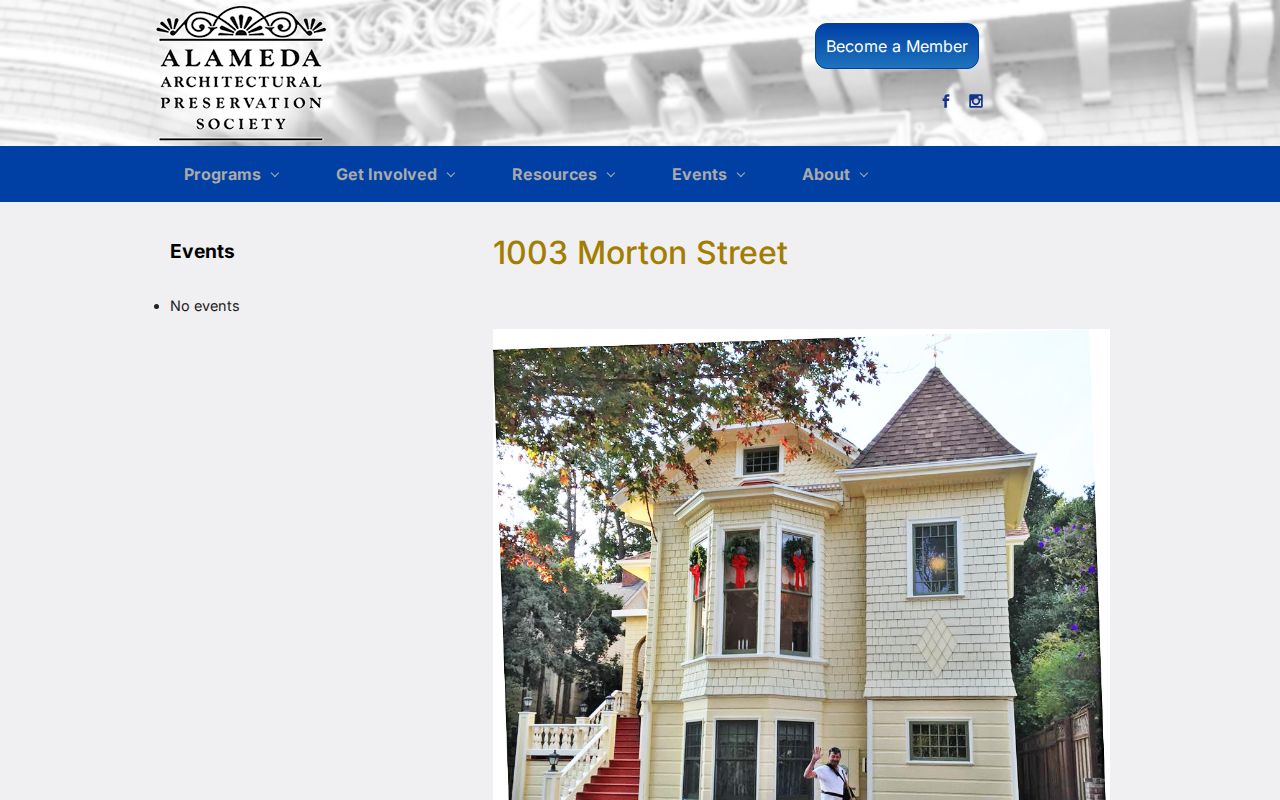
The preservation page provides a concrete Alameda example of why a stable-looking address can conceal a changed structure.
Alameda Vital and Probate Endpoints
When a previous resident disappears from a directory or deed chain, an obituary, death record, or probate file may explain the break. Alameda County and CDPH divide vital-record service between county events and statewide copies. Informational certificates can confirm event facts but are not identity-valid authorized copies. Probate can identify a decedent, petitioner, personal representative, heirs, and a later estate transfer when the file is public.
Use the county Clerk-Recorder forms and certificate routes for the correct copy type. The form page is an access channel, not a personal-name index. Adoption, guardianship, conservatorship, and other confidential material remains restricted.
The Alameda County Clerk-Recorder forms page identifies the correct certificate and recording route.
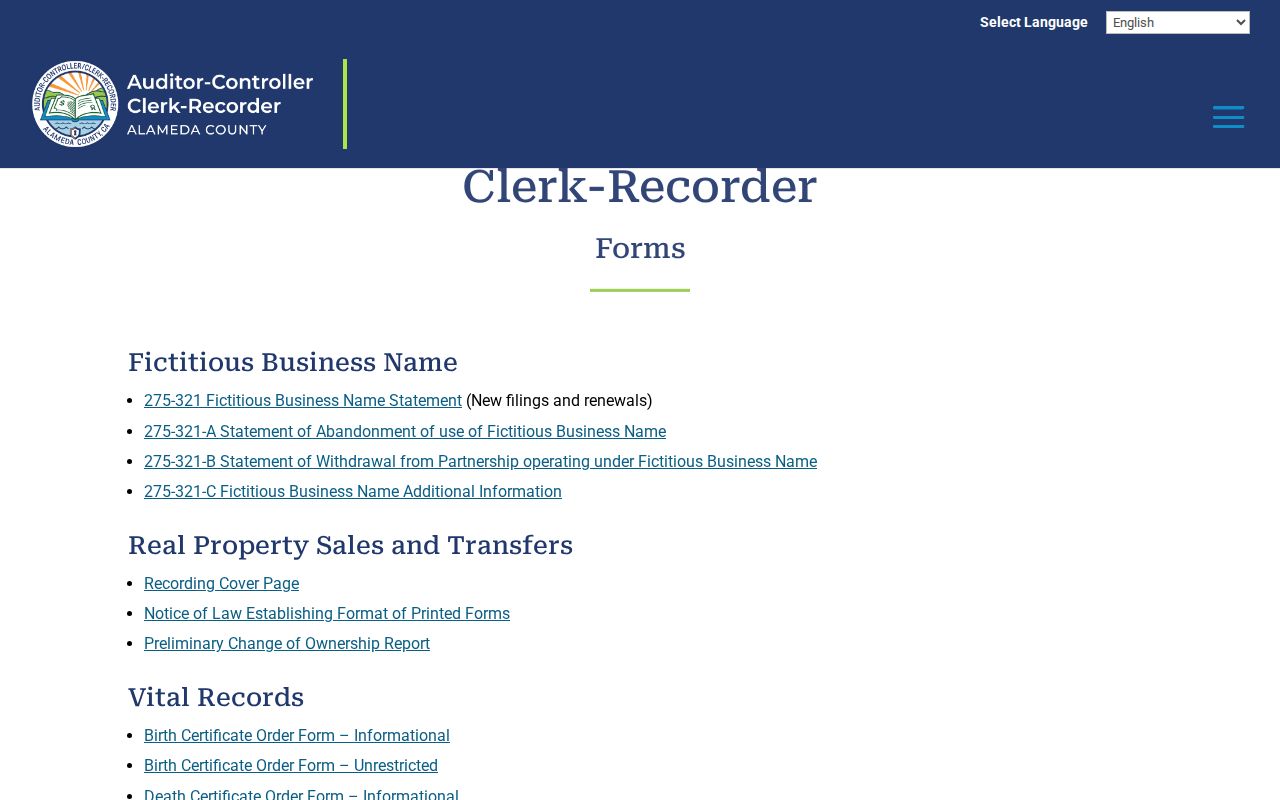
The forms page helps identify the correct custodian and copy category when the address history reaches a vital or estate endpoint.
Past Alameda Residents Need Two Timelines
One timeline follows title: current instrument, earlier seller, older grantee, microfilm, and legal description. The other follows people: directory entry, telephone subscriber, census household, newspaper, obituary, and probate. The timelines meet when a name, date, address, and land description agree. They should not be merged simply because the same surname appears twice.
For previous residents, write the source next to every claim. Mark whether it shows owner, indexed party, listed adult, subscriber, household member, decedent, or heir. Preserve old and current street names, especially Railroad Avenue and Lincoln Avenue or Constitution Way and Wilma Chan Way. A street-name change can make a correct historical record look like a different place.
House-history use. Previous residents research supports family history, property history, and careful archival work. Do not use it to stalk, harass, intimidate, or harm anyone.
The most reliable stopping point is a documented, custodian-verifiable connection. If a record is protected, sealed, or too ambiguous to resolve, leave the gap visible.